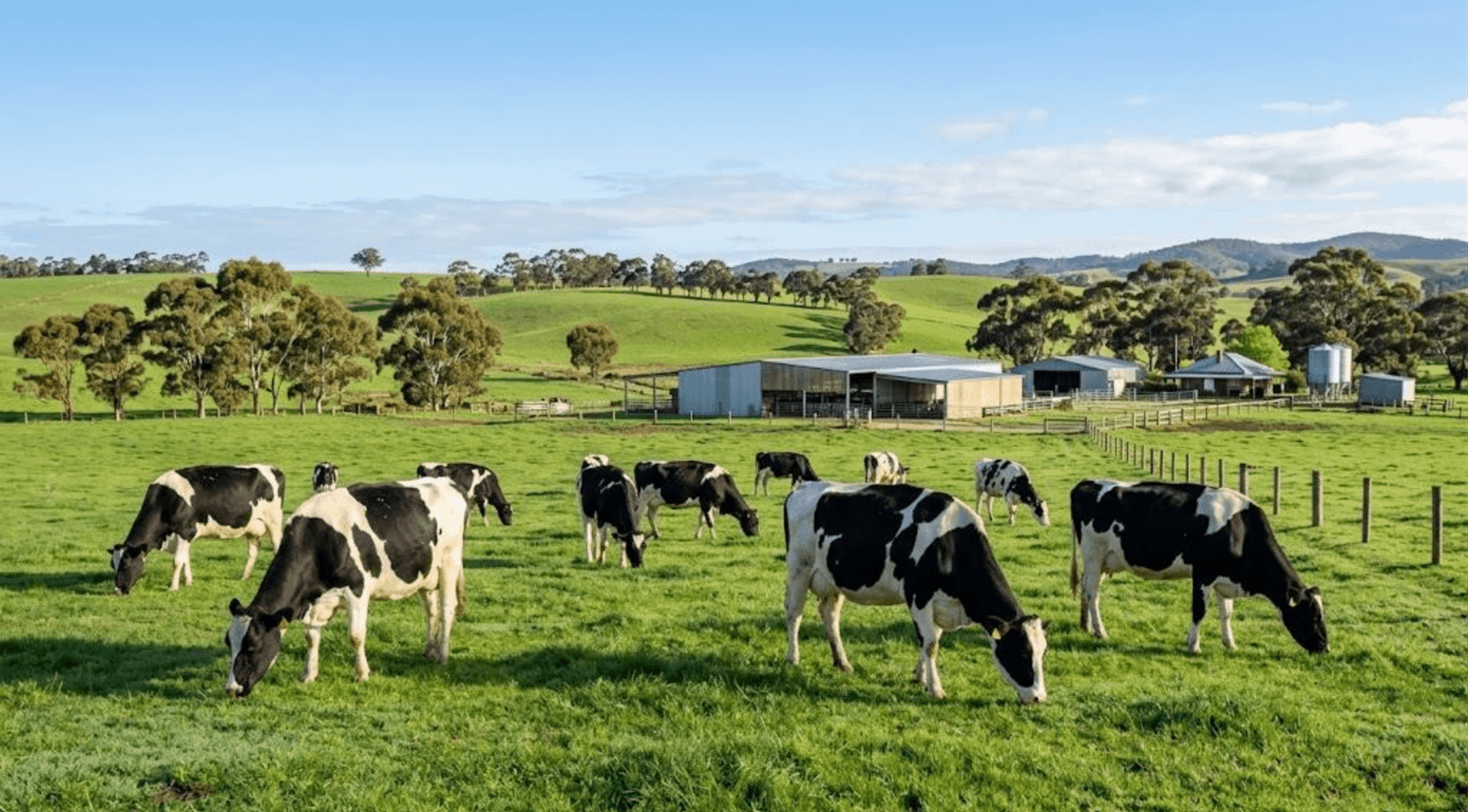
Australia’s agricultural industry plays an important role in food production, regional employment, and international trade. From extensive cattle stations and wheat-growing regions to productive dairy farms and modern food-processing facilities, farming supports communities across the continent. Agriculture and dairy farming in Australia combine traditional farming knowledge with modern technology, environmental management, and changing consumer needs.
Dairy farming is an important part of this wider agricultural sector. Farmers raise dairy cattle, manage pastures and feed, produce raw milk, and supply processors that turn milk into products such as cheese, butter, yoghurt, and milk powder. Conditions differ significantly between regions, so farming systems are adapted to rainfall, temperatures, water availability, land quality, and market requirements.
This guide for Australian Continent explains how Australian agriculture works, where dairy farming is concentrated, how milk moves from farms to consumers, and why sustainability and farm management matter.
Also Read: Australian Lifestyle: Culture, Daily Life, Wellness, Fashion and Modern Living
Understanding Agriculture in Australia
Agriculture in Australia includes crop production, livestock farming, horticulture, and dairy production. The country’s size and varied climate allow farmers to produce a wide range of agricultural goods, although not every region is suitable for every farming activity.
The Australian Government’s agriculture department publishes information about farm businesses, productivity, agricultural regions, and industry trends. Its Snapshot of Australian Agriculture.
Major types of Australian farming
- Livestock farming: Raising cattle, sheep, and other animals for meat, milk, wool, and related products.
- Dairy farming: Producing milk from dairy cattle for fresh consumption and further processing.
- Broadacre cropping: Growing crops such as wheat, barley, and canola over large areas.
- Horticulture: Producing fruit, vegetables, nuts, and other high-value crops.
- Mixed farming: Combining crops and livestock to diversify farm income and make use of land and feed resources.
The best farming system depends on local rainfall, soil, water, available infrastructure, labour, and the farmer’s business goals.
Dairy Farming in Australia: How the Industry Works
Dairy farming is a specialised branch of agriculture focused on producing milk. Dairy farms manage herds, feeding systems, breeding, animal health, milking facilities, and milk storage.
According to the Australian Government’s dairy industry overview, Australia produced approximately 8.8 billion litres of milk in 2022–23. That historical figure illustrates the scale of the industry; for newer production statistics, consult Dairy Australia’s production and sales reports.
How a dairy farm produces milk
The production process involves several connected stages.
- Herd management: Farmers monitor animal health, breeding, nutrition, and reproduction.
- Feeding: Cows receive pasture, conserved forage, or supplementary feed according to the farm’s system and seasonal conditions.
- Milking: Milk is collected using equipment suited to the farm’s size and management approach.
- Cooling and storage: Milk is cooled and stored under controlled conditions to maintain quality before collection.
- Transport: Tankers collect milk and deliver it to processing facilities.
- Processing: Dairy manufacturers produce items such as fresh milk, cheese, butter, yoghurt, and milk powders.
- Distribution: Finished products move through retailers, food-service businesses, and export supply chains.
Each stage needs careful management to protect milk quality, maintain animal welfare, and support the farm’s financial performance.
Where Is Dairy Farming Concentrated in Australia?
Dairy farms are found in several states, but production is concentrated in the cooler and higher-rainfall regions of southeastern Australia. Victoria is particularly important, alongside parts of New South Wales and Tasmania. Dairy operations also exist in Queensland, South Australia, and Western Australia.
The distribution of dairy farming reflects climate, pasture availability, water resources, processing infrastructure, and access to markets. The Australian Government identifies Victoria, New South Wales, and Tasmania among the main milk-producing states.
Victoria
Victoria is Australia’s major dairy-producing state, with important dairy regions including Gippsland, northern Victoria, and western Victoria. Farms use different combinations of grazing, conserved forage, and supplementary feed depending on their location and seasonal conditions.
New South Wales
Dairy farming takes place in several parts of New South Wales, including coastal and inland regions. Local climate and access to water influence pasture growth, feeding decisions, and the timing of milk production.
Tasmania
Tasmania’s climate supports pasture-based farming in suitable regions. Its dairy sector contributes to the state’s agricultural economy and supplies milk for fresh and manufactured dairy products.
Queensland, South Australia, and Western Australia
These states also have dairy farms, although conditions vary considerably. Farmers adapt their production systems to local temperatures, rainfall patterns, feed availability, and the requirements of milk processors.
The following table provides a general overview, rather than a ranking of production volumes.
| State | General dairy farming characteristics |
|---|
| Victoria | Major dairy regions and a substantial milk-processing sector |
| New South Wales | Coastal and inland dairy areas with varied feeding systems |
| Tasmania | Pasture-based production in suitable regions |
| Queensland | Dairy farming adapted to warmer conditions and regional markets |
| South Australia | Dairy production in suitable agricultural districts |
| Western Australia | Dairy farms in regions with suitable climate and infrastructure |
For up-to-date regional statistics, use Dairy Australia’s latest reports rather than relying on older estimates.
Common Dairy Farming Systems in Australia
There is no single method used by every Australian dairy farm. Farmers choose a system based on pasture growth, climate, herd size, labour, available land, and the requirements of their milk supply arrangements.
1. Pasture-Based Dairy Farming
dairyaustralia.com.au
In pasture-based systems, cows obtain a substantial part of their diet by grazing grass and other suitable forage plants. Farmers manage paddocks to provide enough feed while allowing pasture to recover between grazing periods.
Advantages can include:
- Making use of suitable grazing land.
- Reducing reliance on some purchased feed.
- Supporting flexible grazing management.
- Integrating pasture growth into the farm’s seasonal plan.
However, pasture production depends on rainfall, temperature, soil fertility, and irrigation where used. During periods of poor pasture growth, farmers may need to provide hay, silage, or supplementary feed.
2. Supplementary Feeding Systems
Many farms combine grazing with additional feed such as hay, silage, grain, or formulated rations. Supplementary feeding helps address nutritional needs when pasture is insufficient or does not provide the right balance of nutrients.
The amount and type of feed vary by farm. Farmers often work with nutrition advisers to balance feed costs, cow health, milk production, and the condition of the herd.
3. More Intensive Dairy Systems
Some farms use more intensive housing or feeding arrangements, particularly where climate, land availability, or farm infrastructure makes them appropriate. Such systems require careful attention to animal comfort, ventilation, bedding, waste management, water, and feed.
No system is automatically best for every farm. The appropriate choice depends on local conditions, welfare standards, business costs, and production objectives.
How Australian Dairy Farms Manage Cows and Milk Quality
Successful dairy farming depends on more than producing large volumes of milk. Animal health, welfare, hygiene, and consistent milk handling are essential parts of farm management.
Animal health and welfare
Farmers monitor cattle for signs of illness, injury, lameness, heat stress, and changes in behaviour. Good management includes appropriate nutrition, clean water, suitable resting areas, and access to veterinary care.
Heat management is particularly important during hot weather. Shade, airflow, drinking water, and other suitable cooling measures can help reduce heat stress when used appropriately.
Milking hygiene
Milking equipment and storage systems need regular cleaning and maintenance. Farmers follow procedures designed to reduce contamination and maintain milk quality. Milk is cooled promptly and collected under controlled conditions.
Herd records and monitoring
Farm records can include breeding information, milk production, animal health treatments, feed use, and financial performance. Digital tools and automated monitoring systems may help farmers identify changes earlier and make informed decisions.
Dairy Australia provides industry resources covering farm management, animal care, sustainability, and production. Its industry and sustainability resources are useful starting points.
From Dairy Farm to Supermarket: The Milk Supply Chain
Milk moves through several stages before reaching consumers. Understanding this supply chain helps explain why farm management and processing standards are important.
1. Farm production
Cows are fed and cared for, and milk is collected under hygienic conditions.
2. Cooling and collection
Milk is cooled, stored, and transported to a processing facility.
3. Processing and quality control
Milk is tested and processed into fresh milk or other dairy products.
4. Distribution and retail
Finished products are delivered to supermarkets, restaurants, and other customers.
Processing methods vary according to the product. Fresh milk, cheese, butter, yoghurt, and milk powder each require different manufacturing steps, packaging, and storage conditions.
The Economic Importance of Agriculture and Dairy Farming
Agriculture supports rural businesses, employment, food processing, transport, equipment suppliers, and regional communities. Dairy farming contributes through milk production and its connections to manufacturing and distribution.
The sector also faces changing production costs, labour needs, weather risks, and market conditions. Farm profitability depends on revenue as well as expenses such as feed, fertiliser, electricity, fuel, labour, equipment, animal health, and water.
Major factors affecting dairy farm profitability
- Milk prices: The price paid by processors affects farm revenue.
- Feed costs: Pasture, hay, silage, grain, and purchased feed can be significant expenses.
- Weather conditions: Drought, heat, and excessive rainfall can affect pasture, animal welfare, and production.
- Labour and equipment: Milking systems, maintenance, and staffing influence operating costs.
- Water availability: Access to suitable water can affect feed production and farm operations.
- Business planning: Cash-flow management, budgeting, and risk planning help farms prepare for changing conditions.
For a reliable picture of the sector, consult Australian Bureau of Agricultural and Resource Economics and Sciences (ABARES) and Dairy Australia’s current industry reports. Avoid using old production or financial figures as if they describe the current year.
Sustainable Agriculture and Dairy Farming in Australia
Sustainability is an important issue across Australian agriculture. Farmers must manage productive land while protecting soil, water, biodiversity, and the long-term viability of their businesses.
Dairy Australia identifies soil health, water efficiency, waterway protection, emissions, energy use, and biodiversity as important environmental priorities. It also describes practices that farmers can use to reduce environmental impacts.
Soil health and pasture management
Healthy soil supports plant growth and helps farms produce feed. Farmers can use soil testing, appropriate fertiliser application, grazing rotations, and erosion-control measures to maintain soil condition.
Resting paddocks between grazing periods can help pasture recover when managed according to local growth conditions.
Water conservation
Water is needed for livestock, cleaning, and sometimes irrigation. Farms may improve water efficiency by repairing leaks, monitoring use, choosing suitable irrigation systems, and developing plans for periods of limited supply.
Waterway protection is also important. Fencing livestock away from vulnerable streambanks, where appropriate, can help reduce erosion and protect water quality.
Waste and nutrient management
Dairy operations produce manure and other waste that must be managed carefully. Appropriate storage, treatment, and application can help recover nutrients while reducing the risk of runoff into waterways.
Energy use and emissions
Electricity is used for milking equipment, milk cooling, lighting, and other farm operations. Energy-efficient equipment and suitable renewable energy systems may help reduce energy consumption or emissions, depending on the farm.
Dairy Australia’s Australian Dairy Sustainability Framework describes industry commitments relating to animal care, community wellbeing, economic viability, and environmental impact.
Challenges Facing Australian Farmers
Australian farmers work in diverse environments, and the challenges facing one region may be different from those in another.
Drought and variable rainfall
Periods of low rainfall can reduce pasture growth, increase the need for purchased feed, and place pressure on water supplies. Farmers may respond by adjusting stocking levels, changing feed plans, or using drought-management strategies.
Heat stress
High temperatures can affect cattle comfort, feed intake, and milk production. Shade, clean drinking water, ventilation, and appropriate cooling practices can help manage heat risk.
Rising input costs
Feed, fuel, fertiliser, machinery, labour, and electricity costs can affect farm margins. Careful budgeting and monitoring of farm performance can help farmers understand where costs are rising.
Biosecurity and animal health
Disease prevention and early detection protect animal welfare and farm productivity. Farms may use hygiene protocols, animal monitoring, veterinary advice, and appropriate movement controls to manage risks.
Changing consumer and market expectations
Farmers and processors must respond to expectations around food safety, animal welfare, environmental performance, product quality, and supply-chain transparency.
These challenges do not affect every farm in the same way. Local conditions, farm resources, and business decisions all influence the response.
The Future of Agriculture and Dairy Farming in Australia
The future of Australian agriculture will depend on the ability to combine productive farming with resilient business management and responsible resource use.
Several developments are relevant to the sector:
- Digital farm monitoring: Sensors and software can help farmers monitor milk output, animal activity, equipment, and water use.
- Precision agriculture: Data-guided decisions can improve how farmers manage soil, fertiliser, irrigation, and crops.
- Breeding and genetics: Appropriate breeding strategies can support herd health and production goals.
- Renewable energy: Solar and other suitable systems may help some farms manage energy use.
- Better feed management: More accurate nutrition planning can help balance animal needs and feed costs.
- Climate adaptation: Farm plans may need to account for changing temperatures, rainfall variability, and extreme weather.
These developments are not universal solutions. Their value depends on cost, location, farm size, available skills, and the needs of each business.
The goal is to build agricultural systems that remain productive while protecting animals, natural resources, and the communities that depend on farming.
Conclusion
Agriculture and dairy farming in Australia are important parts of the country's food system and regional economy. From pasture-based dairy farms in suitable southern regions to crop and livestock enterprises across the continent, Australian farmers work with different climates, land types, and market conditions.
Dairy farming involves much more than milk production. Animal welfare, feeding, hygiene, processing, water management, environmental protection, and business planning all contribute to the industry's long-term performance.
As technology and sustainability practices continue to develop, Australian agriculture will need to balance productivity with responsible management of land, water, animals, and resources.
For more information about Australian industries, rural communities, wildlife, and regional life, explore related guides on Australian Continent.